Mead is a very popular alcoholic beverage, and as one of the oldest alcoholic drinks known to man, it’s got a truly fascinating history. If you enjoy a tipple and want to nerd out about how this beverage came to be, or you've never even heard of mead and you’re just curious to know more, then buckle up. Here is the complete history of mead!
What is Mead?
‘What is Mead?’ is a question we get asked a lot. Well, here’s your answer!
Mead is a drink made from fermented honey. This is why, throughout history, it has often been called the ‘Nectar of the Gods’. It’s also regularly referred to as honey wine, although it’s not actually classed as a wine because no grapes or grains are involved. Instead, it’s its own classification of beverage.
What is Mead Made From?
Mead is made from three key ingredients: honey, water, and yeast. Once fermented, the result is a delicious and versatile alcoholic beverage. While those are just the basic ingredients, there are an endless number of possibilities when it comes to flavourings and textures. Nowadays, meads are often infused with various fruits like cherry or rhubarb, or spices like ginger, to give the drink a more diverse flavour profile.
When Was Mead Invented?
There is some debate over when mead was first created. The first known evidence of mead was found in Henan Province, Northern China, with experts estimating it to be from around 7000 BC. However, as mead can be made without human intervention, thanks to rainwater diluting the honey in beehives and exposure to naturally occurring wild yeast, mead could have existed in nature whenever bees, water, and yeast came together.
That being said, the evidence suggests it was first discovered and consumed by humans around 9000 years ago, making it one of, if not the oldest, alcoholic drinks in existence.
Is Mead Popular?
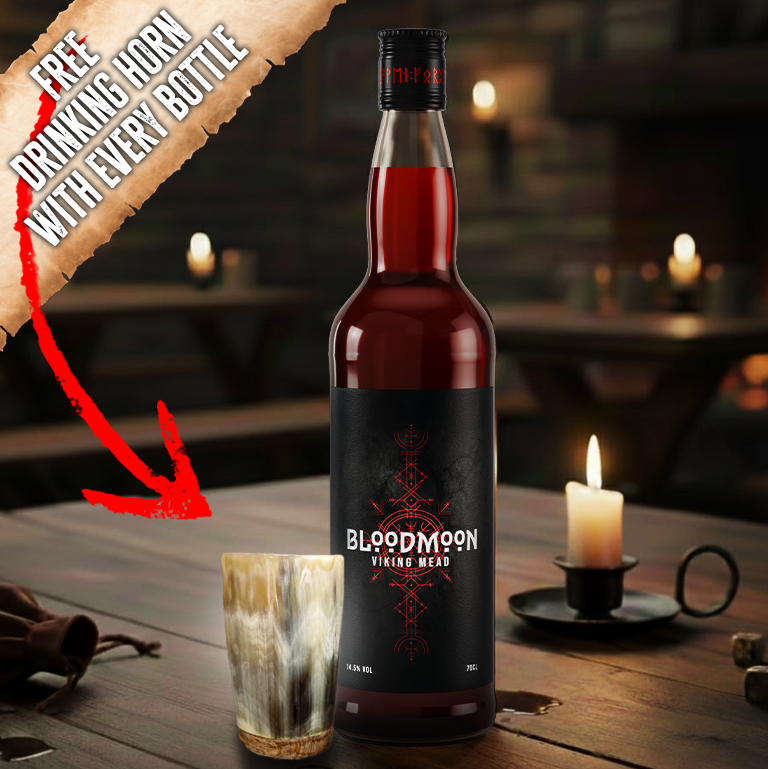
Mead is popular now but it has gone through peaks and troughs throughout history. Many people associate mead with Vikings, and while it was popular, it wasn’t consumed as regularly as ale, which was a daily staple for everyone in that era. However, mead was symbolic and held significant cultural importance. It was seen as a symbol of status in Viking society, and was typically served to wealthy warriors in large drinking horns in a mead hall during feasts, celebrations, or on special occasions.
Vikings are cool (fact), so it’s often overlooked that the ancient Greeks also consumed a significant amount of mead. During the Golden Age, mead was considered a divine drink, believed to grant fertility, immortality, and healing. Its association with the gods transformed it from a simple beverage into an integral part of Greek culture and mythology.
Despite its historical significance, particularly among the Vikings and ancient Greeks, mead did decline in popularity during the 1600s. As beer and wine became more widely consumed and honey remained expensive to produce, the demand for honey wine fell.
However in recent years, mead has made a comeback. Modern brewers have given it a new lease of life by experimenting with a range of flavours and even producing non-alcoholic options. It’s also naturally gluten-free, so it has become a great alternative for those who can’t have, or choose to avoid, gluten.
What Does Mead Taste Like?
Traditional mead is mostly honey, so it does have a distinct honey taste. However, the type of honey used can make a significant difference to the depth and flavour of the mead. Some honeys offer a lighter, more floral flavour while others are deeper and richer, even caramel-like.
Alcohol content percentage can also alter the taste, with most meads varying from around 3.5% to over 20%, depending on the concentration of honey, yeast, and fermentation time. If a brewer adds more honey, there’s more sugar for yeast to convert into alcohol, increasing the ABV. Fermentation time and yeast strain can also affect the end percentage.
If you’re not a fan of particularly sweet drinks, you may still enjoy mead as not all of them are sweet. Many are made to be dry or semi-sweet, as its sweetness entirely depends on how much sugar is left after fermentation.
How Should Mead Be Drunk?
Mead can be drunk hot or cold, so it’s ideal all year round! During summer, keep your mead in the fridge but let it sit in the glass for a few minutes at room temperature before drinking it. This will ensure it’s nice and refreshing, but not so cold that you lose some of its flavour.
If you’re looking for a cosy winter drink while you binge-watch The Lord of the Rings, mead can be served hot, with the ideal temperature sitting at around 50 – 55°C. Just note that you should only heat the mead you’re about to serve, as once it’s fully cooled, it can lose quality.
Where Can You Buy Mead?
Thanks to its growth in popularity, mead is often available in mainstream supermarkets, but it can also be found online, at craft breweries, or you can purchase from dedicated meaderies. Here at Raven Forge we offer a variety of meads, from our popular Viking-inspired Berserker mead to a number of other themed and flavoured meads. So, now you know its history, why not try it today?