We know so much about the way the Vikings went to war. In fact, for a long time, it was all we knew about them.
The reasons for this are numerous, but as a general theme, the Vikings were a society that didn’t leave a lot behind to be studied. Unlike the Romans, their buildings were mostly made of wood, and they preferred to make tools and clothes out of perishable materials like wood, horn and fur, rather than metal or stone. Unfortunately, these materials degrade quickly when they’re put in the ground.
The culture and history of the Vikings were mainly passed on through their sagas, or song stories, which were an oral tradition. The Vikings did have writing in the form of runes and religious symbols, but there is no evidence to suggest these were used for the recording of history. As far as we know, the Vikings had little to no tradition of written history, so most of our knowledge about them comes from the Christian monks that they repeatedly raided. Sadly, this means that much of our knowledge doesn’t come from the most objective source!
Piecing together the daily lives of the Vikings is a jigsaw puzzle based on rumours from other cultures and rare archaeological finds in peat or clay-based soil. Soil with a high clay content, like that found under York, forms a natural airtight barrier that serves as a kind of archaeological Tupperware, keeping out moisture and microbes to preserve wood and horn artefacts.
The discoveries at the Coppergate dig in York in the 1970s provided archaeologists with an almost unrivalled glimpse into how the average British Viking lived, so we’ll be using those finds as a template for the rest of this detailed guide. So, strap in and get ready for part three of our Viking Battles and Raids series: Viking everyday life.
Viking Social Structure – the Makeup of a Viking Village
The easiest way to give you an insight into the everyday Vikings is with an example, but which Viking do we use for this?
As in every historical period, life would have differed massively for the nobility and commoners, men and women or children and adults. Taking a step back, the type of settlement you lived in, its geographic location and cultural heritage would have effects as well.
Your clothing, job, diet, life expectancy, entertainment and religion were all malleable. This is partially due to the rapidity with which the Vikings expanded and settled, which you can read about here.
However, this also demonstrates their adaptability as a culture. They seemed to have preferred assimilation to domination when they settled in an area, and a colony could be completely unrecognisable after just a few generations. That said, some social structures did survive across the Viking culture and we can use these to gain an insight into how the Vikings lived day to day.
Jarls
The first section of society were the Jarls, the nobility. The leaders of the Vikings were the subject of most Christian scholars’ writings and thus are the social group we know the most about. This has skewed our understanding of their culture in the past as these were a disproportionately small group in the wider scope of Viking society.
Karls
The Vikings had a middle class of freemen who came beneath this, known as Karls. These men were free landowners and formed the backbone of Viking society.
Karls fulfilled a range of jobs within the community, from craftsmen to soldiers, but most of them were farmers. They weren’t as wealthy as the noble class but there is some evidence that a good enough warrior could become a húskarl (house Karl), a professional soldier and bodyguard to the Jarl.
Thralls
Beneath Karls were the Thralls, the enslaved. This group performed most of the manual labour within Viking society and were treated as property under law. They could buy their way out of slavery to become a Karl, but a freeborn Karl couldn’t become a full Thrall. If they fell into enough debt they could be declared a bondsman, but there were legal protections for those born free that Thralls did not enjoy. A freed Thrall would always have a slightly lower social status than a freeborn Karl.
Age
Old age dramatically affected a Viking’s day-to-day life. The elderly were held in particularly high regard as they served a function not necessary in cultures that wrote their history down. They remembered.
Viking and Saxon elders were often consulted, not just on matters of history, but also on property disputes. The elders of a village remembered what belonged to who and their support was often treated as legally binding.
By comparison, children were treated as small adults. A Viking was considered fully grown at the age of twelve to fifteen and children were expected to be active participants in household chores and work in the business of their parents.
Boys were traditionally raised and taught by their fathers, learning farming, fishing and weaponry, whilst girls were usually taught household management, cooking and textiles by their mothers. Children could be sent to relatives for foster care to acquire new skills, and sometimes to foster alliances by the Jarls.
Gender
Whilst they usually adhered to traditional gender roles, women in Viking society had a comparatively better standing than the rest of the world in this period. They had more rights and greater social standing, could attend the Ding (parliament), could hold property and were allowed to divorce their spouse if they were unhappy in their relationship, although the right to divorce would be slowly eroded as more Vikings converted to Christianity.
There is also some evidence to suggest that women took up training in weaponry and warfare. For example, there are mentions of female nobles who fought in battle in sagas. There are also legends that tell of legions of shieldmaidens and of course the Valkyries that may well have had some basis in reality.
Karl and Karla
Understanding this social structure gives us a deeper understanding of how the average Viking lived. Freemen, or Karls, were by far the most common members of Viking society, so let’s use a Karl couple to paint a picture of the average Viking’s everyday life.
For the purposes of painting a picture, we’ll call them Karl and Karla and assume they’re in their 20s. They’ve got a couple of kids who help run their farm just outside of the new Viking settlement at York and they’ve got a little money in their back pocket from Karl’s raiding days. With this in mind, let’s see what life would have looked like for them…
Viking Clothing

Karl and Karla dress normally for people of their class. Let’s have a look at the differences in what they wear:
Men’s Clothing
Karl’s farm has been doing well so he can afford a linen under-tunic to keep him warm. Karla was sure to tailor it longer than his over-tunic to make sure people knew he was wealthy enough to afford two layers of clothing. On top of this, he wears a warm, woollen tunic that extends over his thighs, held in place by a leather belt.
He wears simple woollen trousers over linen undergarments that extend to the knee and a set of simple turnshoe leather boots with nalbound socks that Karla made for him underneath. He wears a long woollen cloak over all this that acts as protection against the bitter cold of the British winter. It’s fastened at his shoulder with a carved bone brooch pin that belonged to his father.
He’s topped off this ensemble with a warm woollen cap, fastened at the throat with a chinstrap. Karl is rightly proud of his cap, and there are provisions in Viking law that say he would be within his rights to beat or even kill someone who tried to take it off his head without his permission, particularly if they tried to snatch it from behind as this would count as throttling.
Women’s Clothing
Karla’s ensemble is similar. She wears nalbound socks that she made herself, along with linen undergarments and turnshoe boots. She wears an ankle-length linen underdress with a warm woollen apron dress over the top, cinched at the waist with a belt. The shoulders of her overdress are held up by a pair of brass brooches, joined by a chain of glass beads. Karl got them for her on his last raiding trip. He says he fought a Steppes barbarian for them, but in reality he traded them with a friend for his daily mead ration.
Karla wears a hooded cape over the top of this for warmth, along with her own nalbound cap. She also wears a set of beads as a necklace and some carved wooden bracelets that she made with her children.
Other Social Classes
These general ensembles are partially based on graves and would hold true for most Vikings with minor changes. Thralls would have to make do with cheaper materials in their clothing and probably wouldn’t have been able to afford the more comfortable linen undergarments. Meanwhile, nobles would have shared the same basic clothing with higher quality workmanship and more decoration. They also would have been able to afford materials like imported silk and valuable jewellery to distinguish themselves from Karls.
A noble lord would also sometimes carry his sword as a badge of office or status symbol, but this was more common when he was conducting events or ceremonial business.
Viking Food

Perhaps the greatest difference between Karl and Karla’s experience of everyday life and the experience of Jarls was food. The difference in diet between the nobility and the lower classes had a range of effects on their physiology that would have affected their daily lives.
The greatest difficulty for historians has been trying to discover what the average Viking ate on a day-to-day basis. Most of the evidence we have describes lavish feasts that were held for the nobility on special occasions, and next to nothing is recorded about the way peasants ate. People rarely write about the ordinary, for example, when was the last time you wrote down what you had for breakfast? For the longest time, one of the greatest mysteries facing archaeologists was the question: What did Vikings have for breakfast?
The closest written examples we have come from the early medieval period, which show dramatic differences. Medieval nobility ate fat and meat-rich diets, consumed large amounts of wine and mead, and had access to expensive, imported ingredients that the poorer members of their society did not. The poor usually ate grain-rich diets, filled with pottage (savoury porridge), large amounts of root vegetables and wholegrain bread. Karl and Karla would have fallen closer to the latter category.
The Average Viking Diet
Whilst their diet might sound healthier, it was very high calorie, low in nutrients and was heavily dependent on the agricultural cycle. Meat was incredibly rare and of very low quality, meaning that protein was sparse.
Combining high amounts of intensive farm labour with malnutrition would have meant Karl and Karla being shorter and more prone to serious injuries as their bodies struggled to find the nutrients to properly repair themselves.
Vitamin D was also a rarity, meaning that a huge portion of the population suffered from rickets. Finally, the amount of coarse grain, combined with a lack of Vitamin C, had a hugely detrimental effect on dental health. It would be unusual for Karl or Karla to keep their molars past the age of 40.
Noble Diets
The nobility had other health issues to contend with. The consumption of a high-fat, protein-rich diet, with lots of red meat, meant that they were usually taller and more muscular than their subjects. However, the amount of fat and sugar they ate took a huge toll on their cardiovascular health, with a great number suffering from diseases like atherosclerosis and gout.
Depending on the nobleman, their preference for rich food often meant they would forego a properly balanced diet, creating nutritional deficiencies.
How Do We Know?
There is evidence to suggest that early medieval period diets showed a less pronounced difference between rich and poor, but it was still there. We know from the writings of Christian scholars and the sagas that the Viking nobility ate a similar diet to nobles in early medieval Europe. Quite a few of those nobles were descended from Viking monarchs or had intermarried with them. The question remains: how do we know what Karl and Karla ate?
The answer is simple: poo. Not the most glamorous form of archaeology, but if you want to know what went into a person, the best thing to do is look at what came out of them!
Archaeologists sought out pieces of preserved faecal matter from the Viking era and dated them. These would usually have to come from peat bog areas to properly preserve the poo, and one of the most famous examples comes from York, in the form of the Lloyds Bank Coprolite, more commonly known as the Lloyds Bank Poo.
This colossal piece of fossilised faeces, dating back to the Viking era of York, measures in at a whopping twenty centimetres long, with an eye-watering diameter of five centimetres. To date, it remains one of the largest examples of human excrement in recorded history!
Through the examination of samples like this, archaeologists were able to discover that most people like Karl and Karla would have followed a diet like the early medieval high-calorie, low-nutrition one. The maker of the Lloyds Bank Coprolite seems to have broken this pattern, with a diet that consisted mainly of meat and bread, showing that some Karls did have the wealth to eat like nobility, but this was rare, and apparently quite painful.
Viking Tools
The tools Karl and Karla would have used for their day-to-day activities have been difficult to research, even with peat bog sites like York. The Vikings tended towards the use of materials like wood and horn for tool making, which degrade and decay with even small amounts of groundwater and oxygen. Even with the airtight seal of a peat bog, the smaller tools would have been fine and fragile, easily broken by small impacts and soil subsidence.
Farm Tools

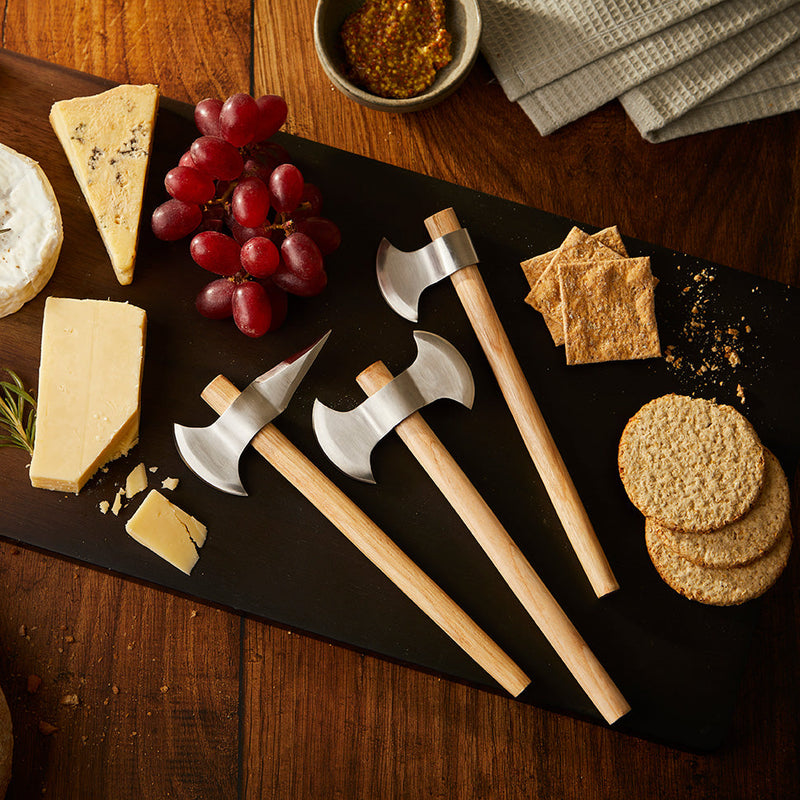
Karl and Karla would have used some metal tools, and these have been the easiest to find and research. Numerous axe heads have been found, showing an array of different hand and wood axes that Karl would have used for wood gathering and construction. Several barbed metal arrowheads have been dated to this period, showing that he would have had a bow and arrows for hunting. Finally, several examples of the all-purpose Saex knives have been unearthed on farmland, showing their use as both weapon and general tool.
These examples would have been used more for outdoor activities around the farm. The Vikings had discovered the use of ploughs and agriculture, as well as warp-weighted looms to weave textiles. These larger tools would have been common on Karl and Karla’s farm, and both would have taught their children how to use them.
Household Tools
Their kitchen would have been filled with mostly wooden implements. The family would have eaten from wooden bowls, with wooden spoons and their knives. However, forks were a very late invention, so you wouldn’t see any of those around.
Karla’s cooking pots and pans would have been made from heavy forged iron, and she would have used them on a central fire that kept their whole house warm. They would own a couple of ceramic pots, which would have been hand-crafted if they weren’t close to a major city like York. However, Karla may have managed to pick up some that were made on the new potter’s wheels, which have just started to be used.
If their clothing needed repairs, Karla would probably get out her set of horn sewing needles. She would have created the nalbound clothes she made with a special nalbinding needle that would also have been made with horn.
If she was creating something more complex, she might get out a small iron dodecahedron that the Vikings used as a knitting jenny. If repairs needed to be made to the house, Karl would usually take old clothes, dip them in pitch and use them to patch holes until he could make a proper repair to the roof.
The Best Tools

Finally, if Karl decided to attend the Jarl’s longhouse for some festivities, he would have needed a drinking horn. Strapped to his belt, this provided an easy access vessel to drink from, provided you had mastered the correct technique. Karl’s father convinced him to drink from the edge of the horn furthest from the inside curve on his first try and laughed loudly as the mead had flowed out all over his face. It’s a rite of passage he hopes to share with his own son soon.
Viking Religion
Religion played a huge part in Karl and Karla’s lives, but this would have been the thing that differed the most depending on where and when they lived.
However, certain aspects of Viking everyday life were so baked into their culture that elements of them are still visible today…
Keeping Time
Our seven-day cycle stems from the Viking Moon day, Tyr’s day, Odin’s day, Thor’s day, Frigg’s Day, and Sun Day, with only Saturn Day being kept from the Romans.
Karl and Karla would have called Saturday Laugardagr, which translates as ‘washing day’, the only day of their week not named after a religious figure.
In much the same way as the Christian calendar, Vikings used their religion to mark the passing of the seasons and Karl and Karla’s year would have been spent preparing for the next big festival. British Vikings would have celebrated fertility festivals similar to Beltane in the spring and harvest festivals similar to Samhain in the autumn. They would also have celebrated at the summer and winter solstices.
Familiar Figures
Their winter solstice traditions are particularly interesting due to how many of them survived. For instance, Wotan, or Odin, was said to roam the frozen wastes at that time of year dressed in a great green cape, laughing in a jolly fashion and carrying a bottomless cauldron of plenty from which he would dole out life-saving presents of porridge to anybody who had been nice that year.
Meanwhile his son, Baldur, the god of divine light and goodness, would die each winter and be hung from the branches of Yggdrasil, the world tree. On the third day, the magic of the tree of light would raise him from the grave to live again. The Vikings believed that Yggdrasil was the tree of life and so took evergreen trees into their houses at Yule (their name for the winter solstice) to represent this.
Changing Attitudes
Karl and Karla would have enjoyed all of these traditions in Britain but might have seen some of them change as the Viking Jarls began to convert to Christianity. New churches, called minsters, were built throughout the north of England to convert Vikings from their worship of Odin and their other gods to Christ.
The Christians notoriously pillaged the pagan festival calendar for good dates, slapping Christmas over Yule, All Hallows Eve over Samhain and Easter over the top of Beltane. From Karl and Karla’s perspective, this would have changed comparatively little.
Their priests would have spoken Latin in their religious services instead of Norse and the pictures on the walls and religious symbols would have changed, but largely they would have continued to believe what they wanted. The church had a far more ‘live and let live’ attitude at this point in history and there are historical examples, like the Latin prayer on the inside of the Coppergate Helmet, that suggest the two religions coexisted with each other.
Viking Trade and Money
As the Viking age went on, Karla and Karl would have noticed a distinct change in their technology and the availability of goods. The advancements in shipbuilding at the start of the 9th century allowed the Vikings to raid further from their native lands and begin settling in different areas.
The raids were often a precursor to expansion and with that expansion came an ever-growing trade network that would have meant goods flowing across the Viking world in greater numbers than ever seen before.
The Danelaw
As they lived in England, Karl and Karla would have seen the first Viking settlements in the Northeast develop out into the sprawling territory known as the Danelaw. This stretched from Northumbria, all the way down to the Midlands and is the origin of what we think of as the British North/South divide today. The larger kingdom required more management than the Vikings had generally needed until this point and, as a result, the Ding became increasingly important.
The Little Dings
A Ding, literally translated as ‘a thing’, was a gathering of the village freemen where they could voice concerns and deliberate with the Jarl over the running of their settlement, as well as introduce laws and settle disputes. England’s Westminster parliament developed separately out of the Saxon Witan, formed of the king’s advisors, but the Viking Ding directly evolved into parliaments all over the North of Europe and would have functioned in a manner far closer to what we have today than the Witan.
Attending the Ding would have been an important part of Karl’s life as it was his chance to advocate for his family’s business. Karla would also have been present at these meetings, though her participation in them would have been limited.
Attendance at the Ding would have allowed the couple to hear the vocal reading of all new laws from the Jarl and the High King. These would have governed the prices of their goods and regulations on their lands in growing complexity as the power and influence of the Danelaw grew.
Coinage
They would also have seen the increasing use of money throughout their lives. As the Viking trade network expanded, the need for a common currency increased. Before this, Karl and Karla would have used a bartering system to trade what they needed with the surrounding farms and at the market. Now the Danelaw could begin to standardise monetary values with its newly minted coinage. York was one of the first places in Britain to produce Viking coins.
Conclusion
As you can see, Karl and Karla lived during a fascinating period of history. They were passionate people who were both dynamic and adaptable. Although it’s true that British Vikings were warriors (as we saw in parts one and two of our series), they were also farmers, fishermen, traders, storytellers and community-minded politicians. Living as a Viking day-to-day meant being all those things and more.
It’s amazing how small a period 200 years is in the grand sweep of British history and that was the entirety of the Viking age, two centuries on the dot.
They invaded in 866AD and they were defeated and forced out in 1066AD. During that time, they established a system of law and culture that still lingers in the British consciousness today. Just like the Romans, you can see the ghosts of them in our place names and attitudes.
We hope you found the story of Karl and Karla interesting, and that they helped you imagine their lives a little easier!